· 4 min read
Tesla Roadster and the SpaceX "A71" Thrusters: The Engineering Explained
Cold-gas thrusters, a fan-and-skirt downforce patent and electric motors: how the next-generation Tesla Roadster is reportedly attacking the grip limit, and what is confirmed versus reported.
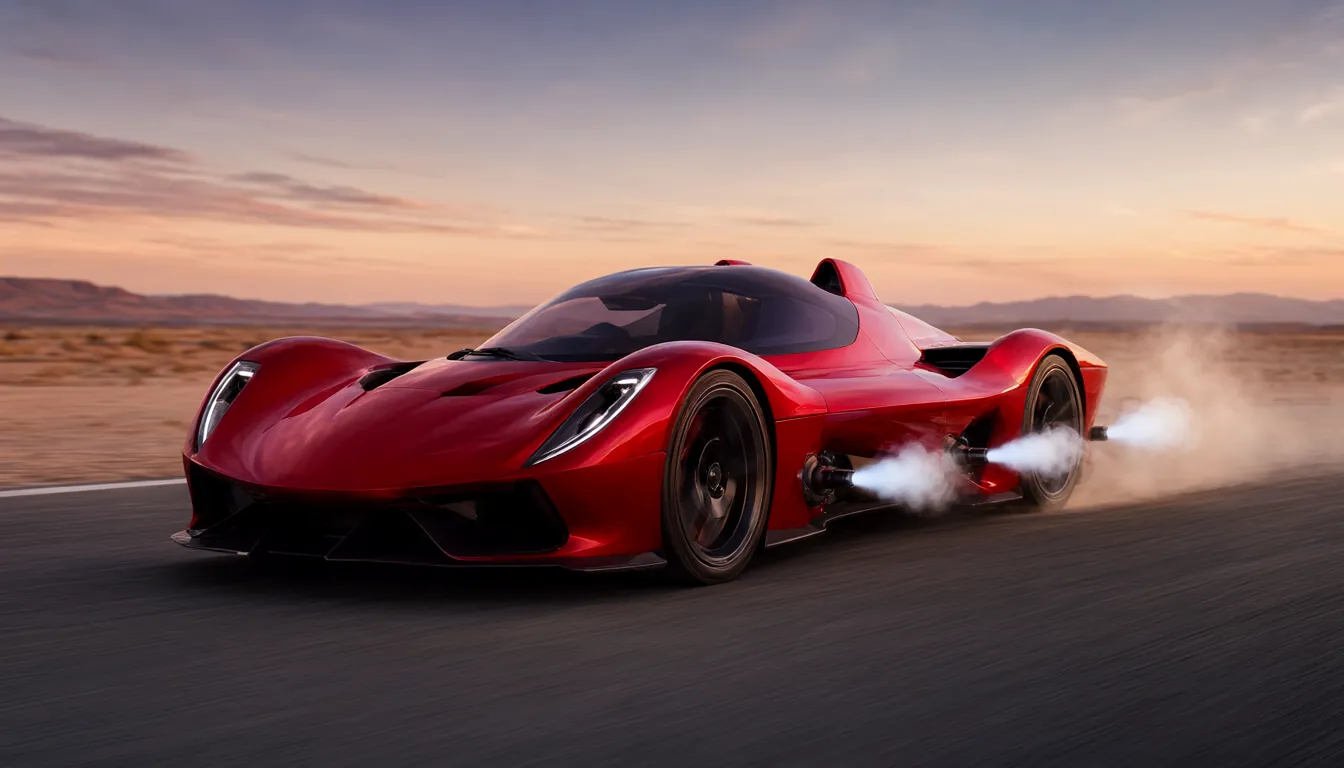
Tesla scheduled the reveal of its next-generation Roadster for October 1, 2026. Ahead of it, most of the attention went to a reported SpaceX-developed thruster package, code-named A71. This article explains the engineering ideas behind it, and is careful to separate what Tesla has confirmed from what was reported by the press. For final specifications, always refer to Tesla's official Roadster page.
Why the old numbers stopped mattering
The prototype shown in 2017 promised 0–60 mph in about 1.9 seconds, over 250 mph and roughly 620 miles of range. Since then, the Model S Plaid brought sub-two-second acceleration to a production sedan, and electric hypercars have caught up. Elon Musk has said the goals were "radically increased", and called a sub-one-second 0–60 time "the least interesting part". That only makes sense if the real story is something else.
The real limit is the tire
Reaching 60 mph in about one second takes an average acceleration of roughly 2.7 g. More power alone cannot do that. A tire can only push on the road as hard as friction allows, and friction depends on how hard the tire is pressed into the ground. Beyond that point, more torque only produces wheelspin.
Normal wings and diffusers do not help at launch: they rely on airflow, and a car standing on the start line has almost none. So the interesting question becomes how to press a car onto the road when it is barely moving.
Idea one: suck the car onto the road
In August 2025, the US patent office granted Tesla patent US 12,377,920 B1, "Adaptive vehicle aerodynamics for downforce". It describes:
- Fans that pull air out from underneath the car
- Deployable skirts that seal a low-pressure zone against the ground
- A fully sealed mode for maximum downforce at low speed on smooth surfaces
- A partly sealed mode that trades some downforce for uneven roads at higher speed
- Software that chooses the mode based on conditions
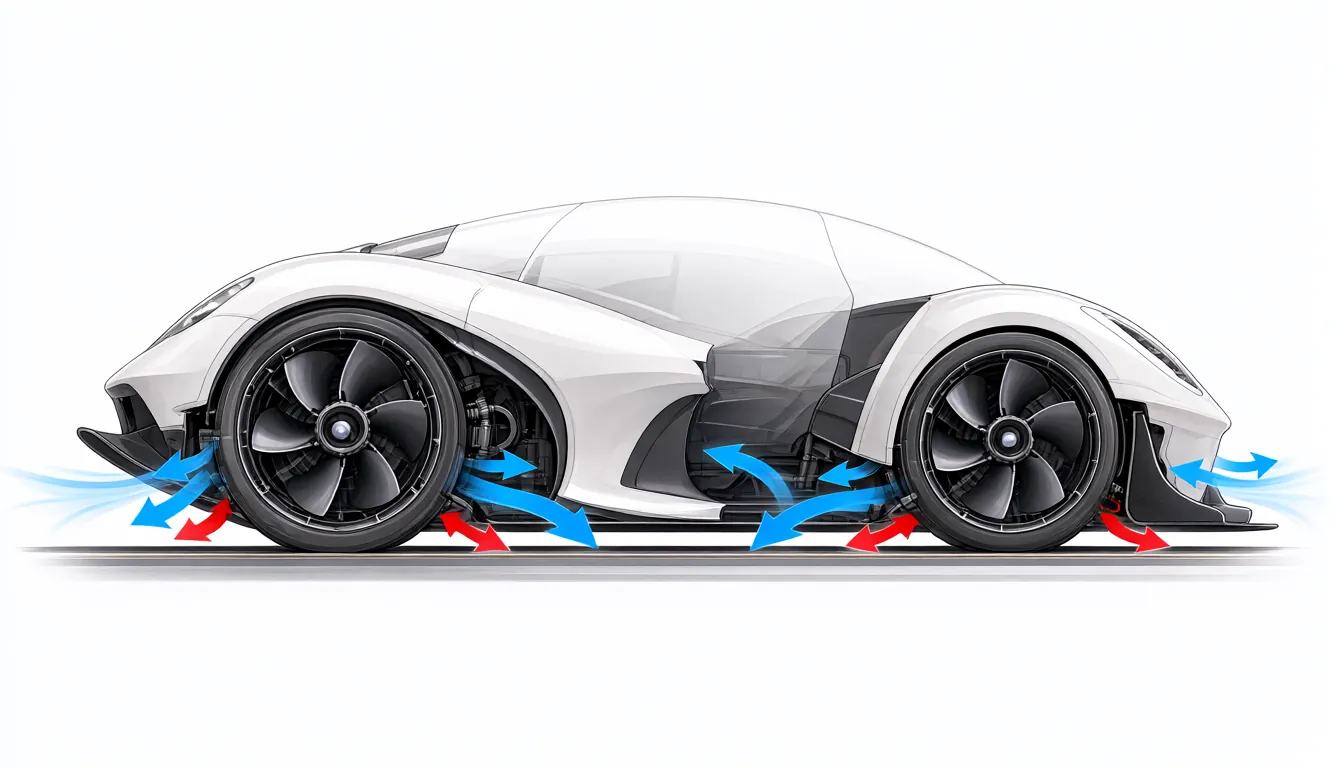
The principle is old and proven. The Chaparral 2J (1970) and the Brabham BT46B (1978) used fans this way, and the McMurtry Spéirling does today. Remove air from beneath the car and atmospheric pressure pushes it down, even at a standstill. What stands out in Tesla's version is the software-controlled, multi-mode behavior.
A patent shows an idea worth protecting. It is not a confirmed production feature.
Idea two: push the body directly
According to reporting by The Information, Electrek and Teslarati, the A71 package (a nod to the SR-71 Blackbird) uses cold-gas thrusters:
- Nitrogen or compressed air stored at very high pressure in a composite tank, the same type of tank SpaceX uses on Falcon 9
- Valves release the gas through nozzles
- The expelled gas pushes the car the other way, with nothing burned
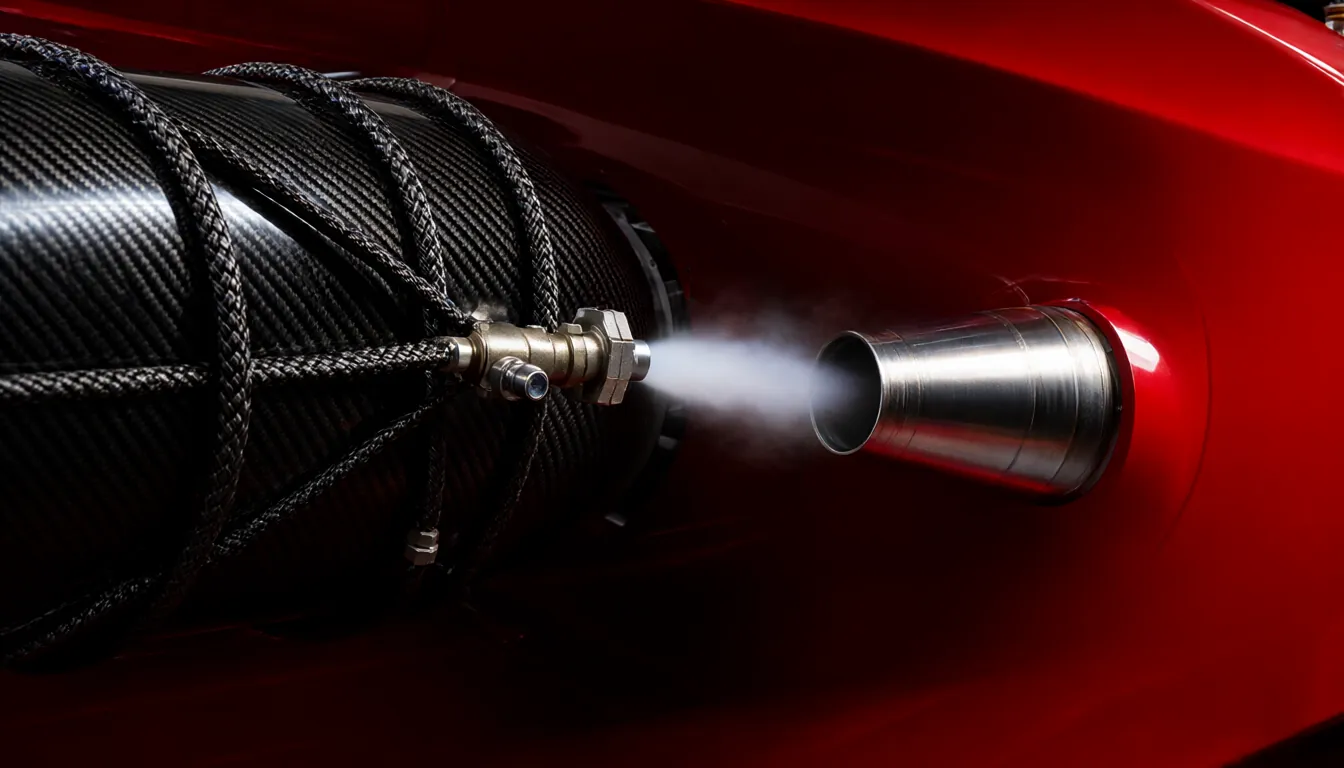
Spacecraft have used cold-gas thrusters for decades to steer precisely. They respond instantly, but they use up gas quickly, so they suit short bursts rather than sustained thrust.
The key point is that a thruster does not push through the tires. Every other upgrade, from bigger motors to stickier rubber, still depends on tire grip. A thruster pushes the body itself, so it can keep adding acceleration after the tires are at their limit. Reports also described the thruster version as very loud, demonstrated remotely with no one on board, and probably not street-legal.
Three layers, one car
| Layer | How it works | Status |
|---|---|---|
| Electric motors | Torque through the tires | Proven Tesla technology |
| Fan downforce | Raises how much grip the tires have | Granted patent; production use unconfirmed |
| Cold-gas thrusters | Pushes the body directly | Teased by Tesla and reported by the press |
The motors push through the tires, the fans raise the tires' limit, and the thrusters skip the tires altogether.
Can it fly?
A rough estimate of our own: a car of about 1,800 kg needs about 17.7 kN of thrust just to hover. Cold gas exits at a few hundred meters per second, which means burning through roughly 25–30 kg of gas every second. Even with large tanks, that is seconds of hovering, not minutes. "Flying" here means a brief lift for show, not a flying car.
What it means for Tesla owners and designers
- Watch the grip technology, not the hover clip. Active downforce is the part that could change performance cars.
- Expect an aircraft-like shape. Reports describe a design inspired by the SR-71, with a low stance and functional vents, a very different canvas from a Model 3 or Model Y.
- Reveal and production are separate. Musk has said production would likely begin 12–18 months after the reveal.
There is no official Paint Shop template for the new Roadster yet. Until there is, you can explore wraps for the cars Tesla supports today in the gallery, or create one in Studio.
Sources
Based on Tesla's official Roadster page and announcements, the US patent office grant US 12,377,920 B1, and reporting by The Information, Electrek, Teslarati and Forbes. Code names and unreleased details are attributed to press reports, and the hover estimate is our own. wraps.cc is not affiliated with Tesla, Inc. or SpaceX.
Popular Tesla wraps
See all →
Find your next wrap
10,000+ free Tesla wraps, or let AI design one for your car.